
Solutions /
Battery storage
Storage sized against
a real revenue stack
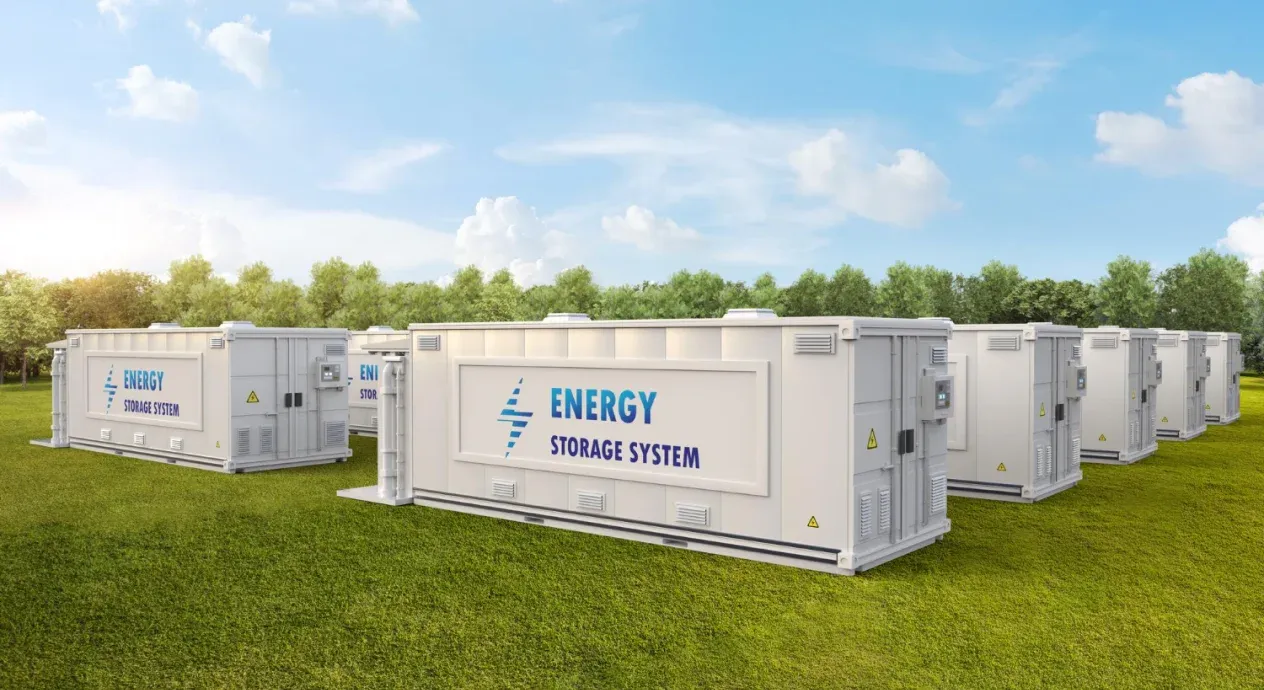
Grid-scale and behind-the-meter storage sized against real revenue stacks, with an augmentation plan for year eight.
1.9 GWh
Storage capacity delivered
3
Markets stacked per asset
98.6%
First-year availability
Overview
Flexibility where the network needs it
A battery is only as good as the revenue it can reach and the degradation it can survive. We model both before anyone specifies a cell.
Benefits
Why storage earns
its place
Six reasons storage has moved from a network experiment to the default companion for new generation.

Cheaper energy
Charging off-peak and discharging at peak cuts the cost of every hour the site cannot generate.

Cleaner dispatch
Storing surplus renewable generation displaces the gas plant that would otherwise cover the evening ramp.

Revenue in three markets
Arbitrage, frequency response and capacity can be stacked when the control strategy is designed for it.

Connection relief
A battery behind the meter often removes the need for a substation upgrade entirely.

Predictable degradation
Warranties written against measured capacity, with augmentation priced from the start.
Asset life planned
A fifteen-year plan with augmentation points, not a ten-year asset sold as twenty.

Why we are
Design for the site, not the datasheet
Most storage disappointments trace back to a specification written for laboratory conditions and installed somewhere hotter.
Ambient-led thermal design
Cooling specified to measured site extremes, which is what protects summer throughput.
Revenue-led sizing
Power and energy sized from the modeled stack rather than from a round number.
Code headroom
Layouts carry spare bays so a separation-distance change does not force a redesign.
Remote operability
Assets designed to be run from a control room, because the nearest technician is hours away.
FAQs
Frequently asked
questions

Photovoltaic modules convert sunlight directly into direct current electricity, which an inverter converts to alternating current for your site or the grid. Output follows irradiance rather than demand, which is why we model your hourly load alongside the resource before fixing a system size.
Every engagement starts from your own data — interval meter readings, an asset register, or a year of on-site measurement — rather than from a template. The design that follows is sized to your load profile, site constraints and growth plan, and we show you the trade-offs we made on the way.
Advisory engagements usually run six to sixteen weeks. Built projects depend almost entirely on permitting and grid connection: a commercial rooftop can be energized inside a year, while utility-scale generation typically runs two to four years from site control to commercial operation.
Yes. We build the inventory, install the controls, map one data set out to whichever frameworks apply to you, and draft the disclosure itself. We also run assurance readiness reviews so the first engagement with an auditor is not the first time the process is tested.
We build the pathway from your asset register, aligning abatement to replacement cycles so you are not writing off working equipment. We also quantify the residual emissions honestly and help you procure durable removals against them, rather than assuming the last ten percent away.